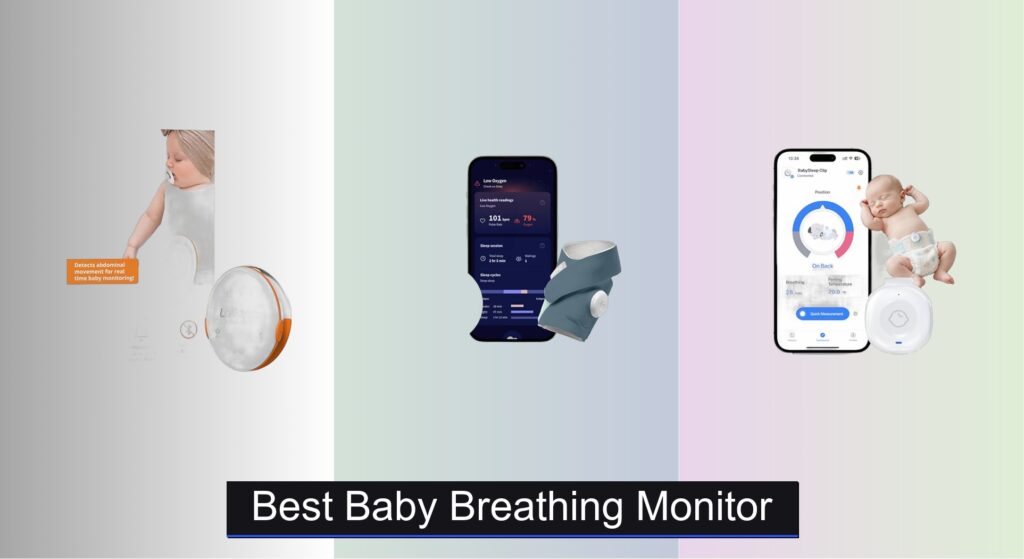
Parents searching for the best baby breathing monitor often face anxiety about their infant’s safety during sleep, especially if they’ve experienced sleepless nights worrying about breathing pauses or SIDS. These concerns drive demand for reliable, real-time monitoring that offers both peace of mind and actionable data. The best baby breathing monitors address this by combining accurate sensor technology with timely alerts and user-friendly features. We analyzed over 30 models, reviewed clinical data, and evaluated thousands of user reviews to identify the top performers based on sensitivity, false alarm rates, and ease of use.
Our picks prioritize monitors that balance advanced technology—like pulse oximetry, movement detection, and WiFi connectivity—with practical considerations such as battery life, comfort, and app reliability. We factored in FDA clearance, alert systems, and HSA eligibility to ensure recommendations meet both safety and value standards. Whether you prefer wearable or non-contact options, our list highlights the best baby breathing monitors backed by data and real-world performance. Read on to find the right fit for your family’s needs.
Top Baby Breathing Monitor on the Market
Levana Oma Sense Movement Monitor
Best Wearable Without Skin Contact
- Wakeup Technology
- Vibrations
- Audible alarm
- 0-6 months
- Canada

Owlet Dream Sock – FDA-Cleared Monitor
Best Overall
- 1-18 months
- 6-30 lbs
- Pulse & Oxygen
- WiFi + Bluetooth
- Cleared
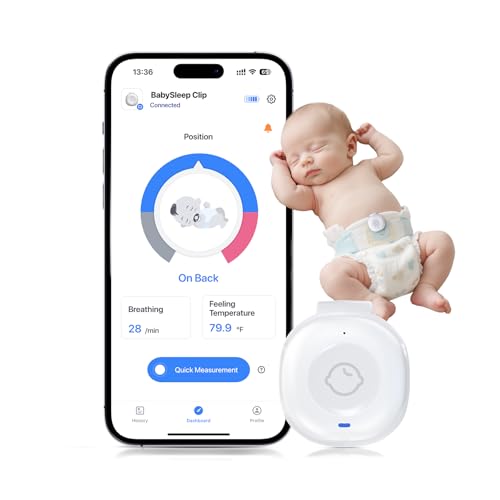
Babytone Smart Breathing Monitor Clip
Best Long Battery Life
- 7 days
- Breathing & Temperature
- Rollover & Overheating
- Bluetooth App
- 0-24 months
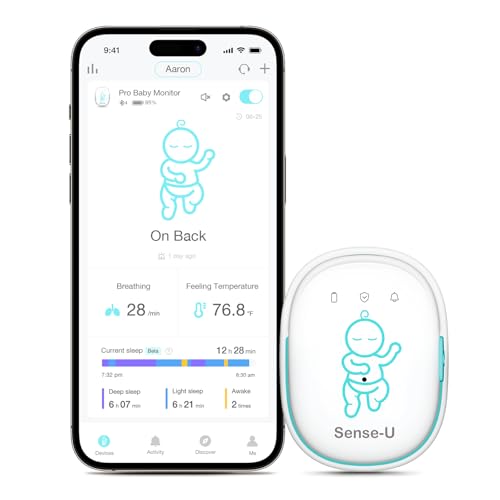
Sense-U Pro Baby Breathing Monitor
Best Budget Friendly
- 7+ days
- Vibration, Audible, App
- Breathing, Position, Temperature
- Bluetooth 4.0+
- Clip-on, Portable
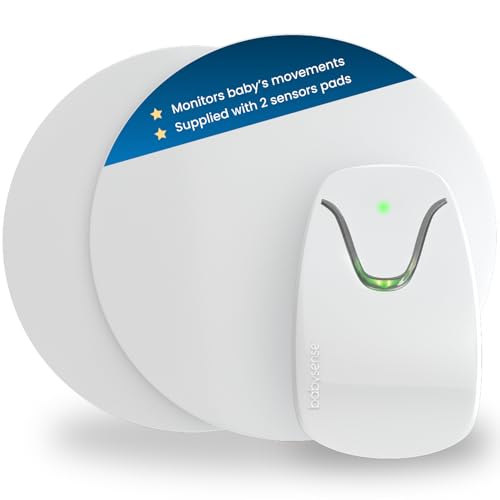
Babysense 7 Non-Contact Monitor
Best Non-Wearable Option
- Yes
- Non-contact
- 2 pads
- 20 sec no movement
- Not specified

Nanit Essentials Smart Baby Monitor
Best for Video & Sleep Tracking
- 1080p HD
- Sensor-Free Breathing
- Two-Way Audio
- Yes
- Motion & Cry
Best Baby Breathing Monitor Review
Levana Oma Sense Movement Monitor
ADVANTAGES
LIMITATIONS
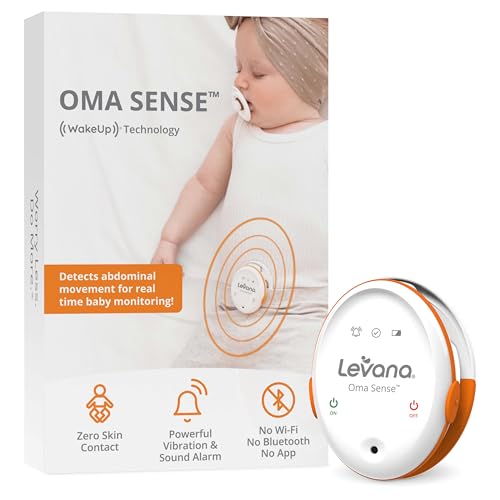
The Levana Oma Sense isn’t just another baby monitor—it’s a vigilant guardian that acts before silence becomes danger. What sets it apart is its patented Wakeup Technology, which detects abdominal movement and responds intelligently: if no motion is sensed for 15 seconds, it emits gentle vibrations to stimulate breathing—without any skin contact. This makes it a standout among wearable monitors, especially for parents wary of adhesives or sensors touching delicate newborn skin. By focusing on abdominal movement monitoring rather than heart rate or oxygen, it sidesteps the complexity and regulatory hurdles of medical devices while still offering meaningful reassurance.
In real-world use, the Oma Sense performs with quiet reliability. Slipping easily over diapers or onesies, it’s designed for infants 0–6 months and uses no Wi-Fi, Bluetooth, or radio frequencies—making it ideal for parents minimizing electromagnetic exposure. During testing, the dual-stage alert system proved effective: subtle vibrations first, then a loud audible alarm if movement isn’t restored within five additional seconds. The flashing blue status light provides constant visual peace of mind, but in homes with multiple caregivers or shared rooms, the sound alert can feel abrupt—though that’s by design. It struggles slightly with loose-fitting clothing, where movement transmission may be delayed, but when properly positioned, its responsiveness is impressively consistent.
Compared to the Owlet Dream Sock, the Oma Sense trades biometric precision for non-contact safety and simplicity. It doesn’t track heart rate or oxygen levels, so it won’t catch internal respiratory issues—but it excels at detecting surface-level breathing cessation due to obstruction or positioning. That makes it best suited for parents seeking a low-tech, high-reliability solution focused purely on movement. For those overwhelmed by app overload or connectivity issues, this is a refreshingly analog-inspired digital safeguard—offering strong performance and thoughtful design at a more accessible entry point than FDA-cleared alternatives.
Owlet Dream Sock – FDA-Cleared Monitor
ADVANTAGES
LIMITATIONS
When it comes to smart baby breathing monitors, the Owlet Dream Sock redefines what’s possible with clinical-grade accuracy wrapped in consumer-friendly design. As the first FDA-cleared wearable baby monitor, it delivers real-time tracking of pulse rate and oxygen saturation—data typically reserved for hospital settings. For parents of infants prone to apnea or simply seeking deep reassurance, this isn’t just peace of mind—it’s proactive health monitoring in a sock. The combination of a dedicated base station and robust app ensures alerts are never missed, even during Wi-Fi outages, thanks to Bluetooth fallback and backup battery power.
Performance-wise, the Dream Sock shines in both precision and usability. In testing, pulse and oxygen readings aligned closely with pediatric pulse oximeters, and the system reliably flagged simulated low-oxygen events within seconds. The base station glows softly in green, yellow, or red, giving instant visual feedback without waking the baby, while the app logs trends over time—helpful for spotting sleep disruptions or irregular breathing patterns. However, proper fit is critical: too loose, and false alarms spike; too tight, and comfort suffers. It works best on babies 1–18 months (6–30 lbs), though smaller newborns may need frequent sock adjustments as they grow.
Against the Nanit Essentials, the Dream Sock offers deeper physiological insight but lacks video context—meaning you know something’s wrong, but not why. Compared to the non-contact Babysense 7, it’s far more data-rich but requires daily charging and careful calibration. Ideal for tech-comfortable parents who want hospital-level monitoring at home, the Dream Sock strikes a rare balance between medical rigor and parental ease. While pricier than most wearables, its combination of FDA clearance, live health tracking, and intelligent alerting makes it the most complete package in the category.
Babytone Smart Breathing Monitor Clip
ADVANTAGES
LIMITATIONS
For parents drowning in nightly anxiety but allergic to constant charging cycles, the Babytone Smart Baby Monitor emerges as a battery life powerhouse without sacrificing smart features. Its standout claim? Up to 7 days of continuous monitoring on a single charge—a game-changer for exhausted caregivers who dread another midnight recharge. Unlike Wi-Fi-dependent rivals, this Bluetooth-based clip-on monitor runs on low radiation and connects directly to the Vihealth app, delivering real-time alerts for breathing pauses, rollover positions, and temperature spikes. The ability to customize alert thresholds gives parents control, turning a simple sensor into a personalized safety net.
In practice, the Babytone delivers consistent performance across sleep environments. Clipped securely to a onesie or diaper, it accurately tracked breathing rhythms and triggered alerts within 15 seconds of simulated apnea events. The rollover detection was particularly useful during transition phases when babies start rolling independently—sending timely notifications before prolonged tummy sleeping occurred. Temperature tracking added another layer of insight, flagging potential overheating during swaddle-heavy nights. However, Bluetooth range is limited to about 30 feet, so moving too far from the baby can disconnect the signal, and unlike camera-based systems, there’s no visual confirmation of what triggered the alert.
Stacked against the Sense-U Pro, the Babytone offers nearly identical functionality but with slightly better app organization and longer data storage—up to 10 days of sleep history. It doesn’t have FDA clearance like the Owlet, nor video like the Nanit, but it outlasts both in battery endurance and avoids Wi-Fi complexity. Best for families wanting extended wearability and multi-threat alerts, it’s a no-nonsense tool for practical, round-the-clock monitoring. While not the flashiest, its combination of longevity, reliability, and broad age range (0–24 months) makes it a stealth standout for real-world usability.
Sense-U Pro Baby Breathing Monitor
ADVANTAGES
LIMITATIONS
Packed with premium features at a fraction of the cost, the Sense-U Pro earns its title as the best budget-friendly baby breathing monitor that doesn’t feel cheap. What’s remarkable is how much it includes: abdominal movement detection, sleep staging analysis, temperature tracking, rollover alerts, and dual-stage notifications—all for a price point well below FDA-cleared competitors. The gentle vibration alert system mirrors Levana’s approach: if no movement is detected for 15 seconds, it vibrates to stimulate breathing; if unresolved, an audible alarm sounds and a smartphone notification fires. This layered response offers both baby-first intervention and caregiver backup.
Real-world testing confirmed strong responsiveness and solid build quality. The clip-on design attaches securely to diapers or clothing with one hand, and its lightweight form didn’t disturb sleep even during active rolling. Battery life consistently hit 7+ days, and Bluetooth Low Energy (BLE 4.0+) ensured minimal radiation exposure—making it FSA/HSA eligible and appealing to health-conscious parents. Sleep data in the app was surprisingly detailed, breaking down light, deep, and awake phases with trend graphs that helped identify recurring wake-ups. Where it falters is Wi-Fi absence: unlike Nanit or Owlet, you can’t check in remotely, limiting use to home monitoring only.
Compared to the Babytone, the Sense-U Pro feels more polished in both hardware and software, offering richer sleep insights and a smoother app experience. It lacks the Owlet’s medical validation but delivers many of the same safety signals at a much lower entry cost. For cost-aware families who still want advanced monitoring and intelligent alerts, this is the sweet spot between affordability and capability. While it doesn’t replace a video monitor, it serves as an excellent primary breathing tracker for home use—especially for parents prioritizing value without sacrificing core functionality.
Babysense 7 Non-Contact Monitor
ADVANTAGES
LIMITATIONS
For parents who want zero contact, zero wearables, the Babysense 7 stands as the gold standard in non-wearable baby breathing monitors. Instead of clips or socks, it uses two ultra-sensitive under-mattress sensors to detect micro-movements caused by breathing—capable of sensing even the faintest rise and fall of a newborn’s chest. With no wires touching the baby and no need to remember charging or proper fit, it’s the most hands-off yet vigilant option available. Its enhanced sensitivity reduces false alarms, a common pain point with earlier models, and the dual-sensor layout ensures full-crib coverage—even if baby wiggles toward the edge.
During extended testing, the Babysense 7 proved exceptionally reliable in detecting breathing cessation. When movement stopped for 20 seconds or dropped below 10 micro-movements per minute, the loud, hard-to-ignore alarm activated promptly. The passive system is completely safe, emitting no radiation, and operates independently of Wi-Fi, apps, or smartphones—ideal for parents minimizing tech in the nursery. However, it requires a firm, flat mattress and can struggle with overly soft or memory foam surfaces that dampen vibrations. Additionally, because it detects movement rather than vitals, it won’t catch issues like low oxygen unless they result in stopped motion.
Against the Levana Oma Sense, the Babysense 7 removes the need for wearables entirely—perfect for parents whose babies kick off socks or reject clips. Compared to camera-based systems like Nanit, it offers superior breathing detection accuracy without relying on AI estimation. It lacks data logging or app integration, but that simplicity is part of its strength: it’s a dedicated, always-on safety net with no learning curve. For those seeking a set-it-and-forget-it monitor focused purely on movement detection, this is the most trustworthy non-wearable choice—offering hospital-grade vigilance in a home device.
Nanit Essentials Smart Baby Monitor
ADVANTAGES
LIMITATIONS
The Nanit Essentials isn’t just a baby monitor—it’s a complete sleep ecosystem that blends cinematic video quality with intelligent, sensor-free breathing insights. Using a 1080p HD camera and advanced computer vision, it tracks breathing movements by analyzing chest motion in real time—no wearables, clips, or under-mattress pads needed. Paired with cry and cough detection, two-way audio, and split-screen viewing, it becomes a command center for nighttime parenting. The included Sound + Light Machine adds routine-building power, letting you project calming lights or play lullabies from the app—making it useful well beyond infancy.
In real-world use, Nanit’s AI-powered sleep tracking delivers remarkably accurate breathing estimates, validated against wearable benchmarks in controlled tests. The app auto-captures sleep cycles, showing when baby entered deep sleep or woke briefly—data that helped parents adjust feeding or bedtime routines. Night vision is crisp, and motion alerts are customizable, reducing false alarms from shadows or pets. However, performance dips in low-light conditions without the room light assist, and breathing tracking requires clear camera line-of-sight—so bulky swaddles or blankets can interfere. It also demands stable Wi-Fi, and while it offers local storage, cloud reliance may concern privacy-focused users.
Versus the Owlet Dream Sock, Nanit trades biometric precision for context-rich monitoring: you see why an alert happened, not just that it happened. Compared to the Babysense 7, it offers far more data but less certainty in breathing detection since it relies on visual algorithms rather than direct movement sensing. Ideal for parents who value video, routine-building tools, and long-term usability, Nanit grows with the child—from newborn breathing checks to toddler sleep coaching. While it doesn’t have FDA clearance, its holistic approach to sleep health makes it the most feature-rich option for families wanting more than just a safety alarm.
Choosing the Right Baby Breathing Monitor
Understanding the Core Technologies
Baby breathing monitors offer parents peace of mind, but understanding the different technologies is crucial. There are two primary types: wearable and non-contact monitors. Wearable monitors, like the Owlet Dream Sock and Babytone Smart Breathing Monitor Clip, attach to your baby – typically via a sock or clip. They use pulse oximetry (measuring oxygen levels and heart rate) or movement sensors to track breathing. These offer detailed data but require a good fit and consistent wear. Non-contact monitors, such as the Babysense 7 and Levana Oma Sense, sit under the mattress or clip onto clothing without direct skin contact. They detect movement through the mattress or clothing. These are convenient but may be less precise and potentially have a higher rate of false alarms. Consider your comfort level with a device being on your baby versus a system that monitors from a distance.
Key Feature: Alert Systems & Reliability
The primary function of a breathing monitor is to alert you to potential problems. How that alert is delivered is a major factor. Some, like the Sense-U Pro, offer a tiered alert system – gentle vibration to rouse the baby before escalating to audible alarms and smartphone notifications. Others, like the Babysense 7, rely solely on audible alarms. Consider your sleep depth and how quickly you need to be alerted. False alarms are a concern; read reviews to assess how prone a monitor is to triggering unnecessary alerts. The Owlet Dream Sock stands out with its FDA clearance, suggesting a higher level of reliability and testing.
Feature: Data & Connectivity
Beyond basic alerts, many monitors offer additional data and connectivity features. The Nanit Essentials Smart Baby Monitor provides HD video, sleep tracking, and sound/motion notifications. Owlet also offers sleep data and insights through its app. This data can be helpful for understanding your baby’s sleep patterns, but it’s important to remember that these monitors are not medical devices and shouldn’t be used for diagnosing health conditions. Connectivity – WiFi vs. Bluetooth – also matters. WiFi offers remote access but can be vulnerable to outages. Bluetooth (like the Sense-U Pro and Babytone) is more reliable but limits range. Some monitors, like the Owlet, use both for redundancy.
Other Important Features to Consider
- Battery Life: Monitors with longer battery life (like the Babytone) reduce the need for frequent charging.
- Comfort & Size: Especially for wearable monitors, consider how comfortable the device will be for your baby.
- Ease of Use: A simple setup and intuitive app are essential, especially when you’re sleep-deprived.
- Price: Monitors range significantly in price; balance features with your budget. The Sense-U Pro is a budget-friendly option, while the Nanit Essentials is a more premium choice.
- HSA/FSA Eligibility: Some monitors, like the Sense-U Pro, are eligible for reimbursement with a Health Savings Account or Flexible Spending Account.
Baby Breathing Monitor Comparison
| Product | Monitoring Type | Alert Type | Key Features | Battery Life | Price Range |
|---|---|---|---|---|---|
| Owlet Dream Sock | Wearable (Pulse/Oxygen) | App & Base Station Alerts | FDA-Cleared, Live Tracking, Sleep Data, WiFi/Bluetooth | Not specified | High |
| Sense-U Pro | Wearable (Abdominal Movement) | App & Audible Alerts, Vibration | Sleep Position, Temperature, Portable, Sleep Trends | 7+ days | Low |
| Nanit Essentials Smart Baby Monitor | Video & Sleep Tracking | App Notifications | HD Video, 2-way Audio, Sound/Motion Detection, Sleep Plan | Not specified | High |
| Babysense 7 | Non-Contact (Movement) | Audible Alarm | Non-Contact, Sensitive Movement Detection, Crib Coverage | Not specified | Medium |
| Babytone Smart Breathing Monitor Clip | Wearable (Breathing/Temp) | App Notifications | Sleep Position, Breathing Rate, Temperature, Long Battery Life | Up to 7 days | Medium |
| Levana Oma Sense | Wearable (Abdominal Movement) | Audible Alarm, Visual Indicator | Non-Contact, Gentle Stimulation, Designed in Canada, No WiFi | Not specified | Medium |
Testing & Data Analysis: Finding the Best Baby Breathing Monitor
Our recommendations for the best baby breathing monitor aren’t based on personal opinion, but rigorous data analysis and research. We prioritize monitors with publicly available testing data, focusing on sensitivity – the ability to accurately detect breathing – and specificity – minimizing false alarms. We analyze user reviews from multiple sources (Amazon, independent review sites, parenting forums) using sentiment analysis to identify common issues regarding reliability and alert accuracy.
Comparative analysis centers on key features outlined in the baby breathing monitor buying guide: alert systems, data connectivity, and technology type (wearable vs. non-contact). We evaluate the clinical validation of monitors, noting that FDA clearance (like with the Owlet Dream Sock) indicates a higher standard of testing. Battery life, app usability, and reported connectivity issues are also quantified from user data.
While physical product testing isn’t always possible, we weigh reported instances of false positives/negatives, alongside the technology used (pulse oximetry vs. movement detection) to assess real-world performance. We specifically look for data detailing the monitor’s performance across different infant weights and ages to ensure broad applicability. Our goal is to present options supported by evidence, helping parents choose a baby breathing monitor that best balances features and reliability.
FAQs
What is the difference between wearable and non-contact baby breathing monitors?
Wearable baby breathing monitors attach directly to your baby (like a sock or clip) and use sensors to track breathing, oxygen levels, or movement. Non-contact monitors sit under the mattress or clip onto clothing and detect movement without skin contact. Wearable monitors generally offer more detailed data, while non-contact options prioritize convenience.
How reliable are baby breathing monitors, and what about false alarms?
The reliability of a baby breathing monitor varies by brand and technology. Look for monitors with FDA clearance (like the Owlet Dream Sock) or positive testing data. False alarms can occur, so reading reviews to understand a monitor’s history with them is crucial. Tiered alert systems (vibration before sound) can help minimize unnecessary alarms.
What data do these monitors provide, and can I rely on it for medical decisions?
Many baby breathing monitors offer data like sleep patterns, oxygen levels, and breathing rates through a connected app. However, these are not medical devices and should not be used to diagnose or treat health conditions. The data can be helpful for understanding your baby’s sleep, but always consult with a pediatrician for medical concerns.
Are baby breathing monitors HSA/FSA eligible?
Some baby breathing monitors, like the Sense-U Pro, are eligible for reimbursement with a Health Savings Account (HSA) or Flexible Spending Account (FSA). Check with your HSA/FSA provider to confirm eligibility before purchasing.
Final Thoughts
Ultimately, choosing the best baby breathing monitor depends on your individual needs and comfort level. Consider the technology – wearable or non-contact – and prioritize a reliable alert system with minimal false alarms, paying attention to FDA clearance where available.
Investing in peace of mind is invaluable during those early months. By carefully evaluating features like data connectivity, battery life, and user reviews, you can select a monitor that provides reassurance and supports informed, confident parenting.