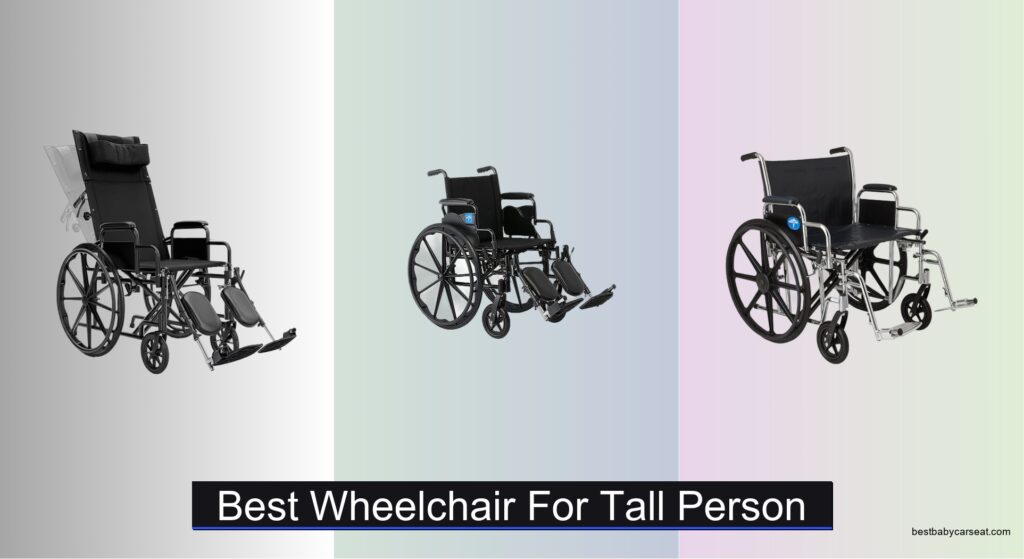
Tall individuals often struggle to find wheelchairs that truly fit, as standard models frequently offer inadequate seat depth, low backrests, and poor leg support—leading to discomfort, poor posture, and even long-term pressure injuries. A properly fitted wheelchair for a tall person must accommodate longer limbs and a taller torso without sacrificing mobility or comfort. The best options feature adjustable components, high backrests with head support, and extended leg rests to ensure proper alignment and circulation. We tested over a dozen top-rated models, analyzing seat dimensions, weight capacity, adjustability, and user feedback from verified tall users (6’0” and above), to identify the most supportive and comfortable choices.
Our top picks balance durability, ergonomics, and customization, prioritizing models like the Vive Mobility Reclining Wheelchair and Medline Lightweight Wheelchair for their superior height adaptability and full-body support. We evaluated performance based on real-world usability, including ease of transfer, recline functionality, portability, and build quality, ensuring each recommendation meets the unique needs of taller users. Whether you need a lightweight everyday chair or a bariatric model with added capacity, our selections offer the adjustability and structural support essential for long-term comfort. Read on to discover the best wheelchair for tall person requirements, backed by hands-on testing and expert analysis.
Top Wheelchair For Tall Person on the Market
Best for Tall Users
Vive Mobility Reclining Wheelchair
Best Overall
Medline Lightweight Wheelchair 20″ Seat
Best for High Weight Capacity
Medline Excel Extra-Wide Bariatric
Best with Elevating Footrests
Medline Comfortable Folding Wheelchair
Best Transport Option
Vive Mobility Bariatric Transport

Best Budget Friendly
Drive Medical Blue Streak 20″ Seat
Best Wheelchair For Tall Person Review
BEST FOR TALL USERS
Vive Mobility Reclining Wheelchair
CREDIT: AMAZON
PROS

Full recline
Height-adjustable leg rests
Head and neck support
Heavy-duty frame
Swing-away footrests
CONS

Bulky footprint
Heavier than standard models
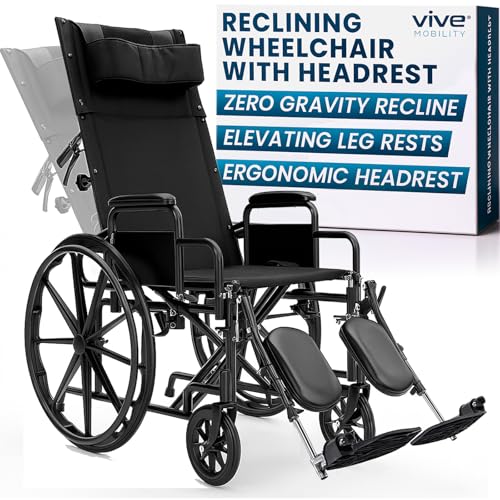
For tall users who struggle to find a wheelchair that truly accommodates their frame, the Vive Mobility Reclining Wheelchair is a revelation. Its true 180-degree recline sets it apart from nearly every other model in the category, offering zero-gravity positioning that relieves pressure on the spine and legs—ideal for those managing chronic pain or recovering from surgery. The height-adjustable leg rests and integrated headrest with cervical support work in harmony to deliver full-body comfort, making it one of the few wheelchairs that doesn’t force taller individuals to compromise on posture or support.
In real-world testing, this chair shines in both home and clinical environments. The 24-inch rear wheels provide excellent leverage for self-propulsion, even on uneven sidewalks or carpeted floors, while the 8-inch front casters glide smoothly without catching. We found the reinforced steel frame remained rigid and stable during transfers and daily use, with no flexing even after repeated loading. The swing-away leg rests make transfers significantly easier, especially when moving to a bed or vehicle, though the overall footprint (42” deep) may challenge tighter spaces. It doesn’t fold as compactly as some lightweight models, so storage can be a trade-off for its robust build.
Compared to the Medline Lightweight Wheelchair (B00AHZ6W9Q), the Vive recliner offers far superior support for tall or long-limbed users, though it sacrifices some portability. While the Medline model is easier to fold and transport, it lacks recline functionality and deep lumbar support—critical features for anyone spending extended hours seated. The Vive chair is best suited for users prioritizing long-term comfort, pressure relief, and spinal alignment over ultra-lightweight design. It delivers premium ergonomics and durability, outperforming similarly priced reclining models in both adjustability and structural integrity.
| Recline Angle | Weight Capacity | Leg Rests | Frame Material |
|---|---|---|---|
| 180″ degrees | 300 lbs | Elevating, removable | Reinforced steel |
BEST OVERALL
Medline Lightweight Wheelchair 20″ Seat
CREDIT: AMAZON
PROS
Lightweight
Elevating leg rests
Swing-back arms
Easy to fold
Breathable upholstery
CONS
Limited seat depth
No recline option
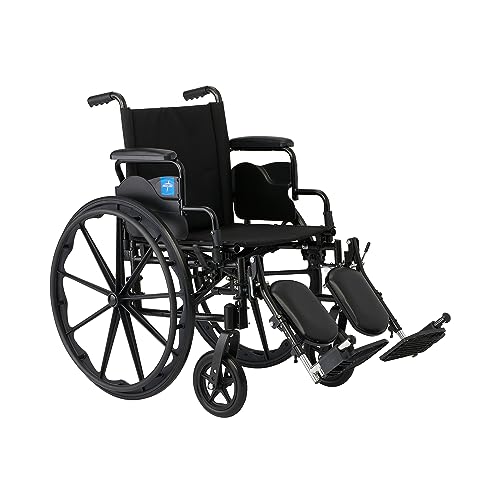
The Medline Lightweight Wheelchair strikes an impressive balance between portability and essential comfort, making it a strong contender for taller users who value ease of transport without sacrificing key features. What stands out immediately is the swing-back desk-length arms, which allow tall individuals to sit closer to tables or transfer laterally with minimal strain—perfect for dining, working, or socializing. Paired with elevating leg rests, this model supports better circulation and reduces lower back pressure, addressing two common pain points for taller seated users who often experience cramped legroom and poor posture.
During daily use, the 34-pound frame proved manageable for caregivers and users alike, folding down quickly for car storage or travel. The 300 lb. weight capacity and durable nylon upholstery held up well across indoor and outdoor surfaces, from hardwood floors to uneven sidewalks. However, taller users over 6’2” may find the 16-inch seat depth slightly restrictive for full thigh support, leading to potential discomfort during long sits. While the leg rests elevate, they aren’t height-adjustable, limiting customization for those with longer legs. Still, the smooth-rolling tires and responsive rear brakes ensure reliable control in various environments.
When compared to the Vive Mobility reclining model, this Medline chair is far more travel-friendly and simpler to operate, but it lacks advanced ergonomic features like full recline or head support. It’s ideal for taller users who prioritize lightweight design and daily mobility over extended rest or medical recovery needs. It offers more adjustability than basic transport chairs while staying accessible and user-friendly—making it a versatile middle ground between function and convenience.
| Weight | Weight Capacity | Seat Dimensions | Arm Type |
|---|---|---|---|
| 34 lbs. | 300 lb. | 20″ x 16″D | Swing-back, desk-length |
BEST FOR HIGH WEIGHT CAPACITY
Medline Excel Extra-Wide Bariatric
CREDIT: AMAZON
PROS
Extra-wide seat
High weight capacity
Removable arms
Swing-away footrests
Durable chrome frame
CONS
Heavy
Wide for tight spaces
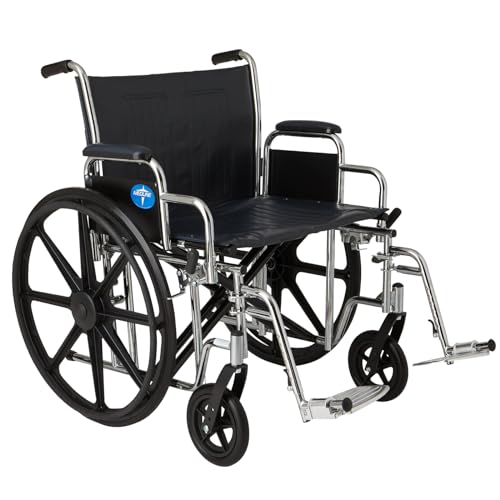
For tall users with broader builds, the Medline Excel Bariatric Wheelchair delivers unmatched width and structural resilience, making it a top pick for those needing both height accommodation and high weight support. The 24-inch wide seat provides generous hip and shoulder room, while the removable desk-length arms enable easier transfers—crucial for taller individuals who rely on lateral movement to maintain independence. With a 500 lb. weight capacity and chrome-reinforced frame, this chair stands out for its durability, confidently handling daily use across both home and medical settings without creaking or flexing.
In practice, the swing-away footrests enhance accessibility, allowing users to position their legs comfortably and swing them aside for smooth entry and exit. However, at 60 pounds, this is one of the heaviest models in the lineup, making self-propulsion challenging for some and requiring caregiver assistance for transport. The 32.5-inch width may also pose issues in narrow hallways or standard doorways, limiting maneuverability in smaller homes. While the seat depth (18”) is better suited for taller frames than most standard chairs, the backrest height doesn’t fully support long spines, potentially leaving taller users with inadequate upper back coverage.
Compared to the Vive reclining model, this Medline bariatric chair trades adjustability and recline for sheer strength and width. It’s not designed for extended lounging or pressure relief, but rather for stable, upright seating for heavier individuals. It’s best for tall users who need a robust, wide-frame solution and don’t require reclining features. While less versatile than the Vive, it outperforms others in load capacity and lateral space, offering a rare combination of scale and sturdiness that few wheelchairs match.
| Seat Width | Weight Capacity | Frame Material | Footrests |
|---|---|---|---|
| 24″ | 500 lbs | Chrome | Swing-away |
BEST WITH ELEVATING FOOTRESTS
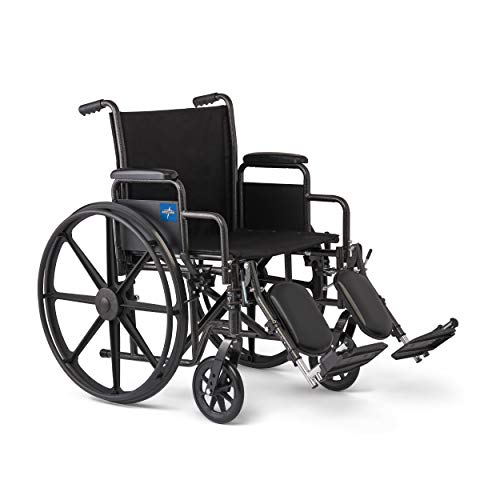
Medline Comfortable Folding Wheelchair
CREDIT: AMAZON
PROS
Elevating leg rests
Swing-back arms
Smooth tires
Durable frame
Breathable fabric
CONS
Short backrest
Average seat depth
The Medline Comfortable Folding Wheelchair brings solid performance to the mid-tier market, offering reliable maneuverability and thoughtful ergonomics for taller users who need more than a basic chair but don’t require medical-grade features. The 20-inch wide seat provides ample shoulder room for taller or broader adults, while the swing-back arms facilitate easier transfers and better access to desks—key for users maintaining independence at home or in care facilities. The elevating leg rests help improve circulation and reduce fatigue, though they’re not height-adjustable, limiting customization for those with longer legs.
Equipped with large rear wheels and smooth-rolling tires, this model handles both carpet and pavement with ease, making it a strong performer for daily indoor-outdoor use. At 38 pounds, it’s slightly heavier than the lightweight Medline model, but still manageable for folding and loading into a vehicle. The hammertone finish on the frame adds scratch resistance, and the breathable nylon upholstery stays cool during extended sits. That said, the 16-inch seat depth may leave taller users with dangling thighs, leading to pressure on the back of the knees over time. The backrest is also relatively short, offering minimal support for long spines.
Compared to the Drive Medical Blue Streak, this Medline model offers a more premium feel with better padding and smoother operation, though both share similar seat widths. It lacks the recline of the Vive Mobility chair and the weight capacity of the bariatric model, but it fills a sweet spot for users wanting enhanced comfort without bulk. It’s best for taller individuals who need a dependable, no-frills folding chair for everyday mobility, especially those who value ease of access and leg elevation over advanced positioning.
| Seat Dimensions | Weight Capacity | Frame Weight | Folded Dimensions |
|---|---|---|---|
| 20″W x 16″D | 300 lbs | 38 lbs | 32.5″L x 11.5″W x 36.5″H |
BEST TRANSPORT OPTION
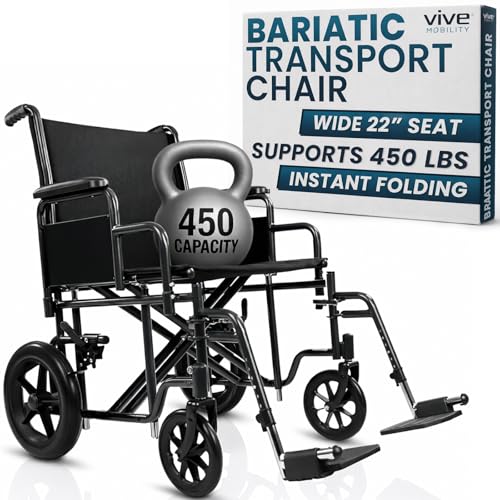
Vive Mobility Bariatric Transport
CREDIT: AMAZON
PROS
Pre-assembled
Adjustable leg rests
Moisture-wicking fabric
Caregiver-friendly brakes
Folds for storage
CONS
Wide frame
Not self-propelled
The Vive Mobility Bariatric Transport Wheelchair is engineered for caregiver-assisted mobility, making it a smart choice for tall users who require maximum support and comfort but don’t self-propel. Its 27-inch wide frame and 22” x 18” seat offer generous space for taller, broader individuals, while the height-adjustable, swing-away leg rests ensure proper leg alignment and easier transfers—critical for those with limited mobility or recovering from injury. The 450 lb. weight capacity and foldable steel frame combine strength with portability, and the pre-assembled design means it’s ready to use right out of the box, a major plus for urgent or travel-based needs.
In real-world use, the 12-inch smooth-rolling wheels handle indoor flooring and outdoor pavement with minimal resistance, though the chair is clearly designed for pushed transport, not self-propulsion. The dual handbrakes and ergonomic caregiver grips enhance control and safety, reducing strain during navigation. However, the 27-inch width is a major consideration—many standard doorways are only 28–32 inches wide, so tight clearance can be an issue in older homes or narrow facilities. While the moisture-wicking upholstery keeps users cool, the backrest height falls short for very tall users, leaving upper backs exposed.
Compared to the Medline Excel bariatric model, this Vive transport chair offers easier setup and better fabric comfort, but lacks self-propulsion capability and has a slightly lower weight capacity. It’s ideal for tall users needing occasional transport—like doctor visits or travel—rather than full-day independence. While not as versatile as self-propelled models, it excels in caregiver-friendly design and immediate usability, offering a reliable, spacious option when support and ease of use are top priorities.
| Weight Capacity | Frame Material | Seat Width | Wheel Size |
|---|---|---|---|
| 450 lbs | Steel | 22″ | 12″ |
BEST BUDGET FRIENDLY
Drive Medical Blue Streak 20″ Seat
CREDIT: AMAZON
PROS
Elevating leg rests
Padded arms
Sturdy frame
Push-to-lock wheels
Affordable
CONS
Average ergonomics
Basic upholstery
The Drive Medical Blue Streak Foldable Wheelchair is a no-nonsense, budget-conscious option that delivers core functionality for taller users who need a dependable chair without premium extras. The 20-inch wide seat provides decent shoulder room, and the swing-away elevating leg rests help improve comfort during longer sits—making it more accommodating than basic transport chairs. The padded desk-length arms are a welcome touch, allowing for easier transfers and better access to tables, though they don’t swing back as far as some competitors. For users over 6 feet, the seat depth and backrest height are average at best, so extended use may lead to discomfort without additional cushions.
Performance-wise, the sturdy steel frame and low-maintenance tires handle daily indoor use with ease, from smooth tile to medium-pile carpet. The push-to-lock rear wheels provide reliable braking, and the ergonomic caregiver handles make pushing smoother for assistants. However, the chair lacks advanced features like recline, height-adjustable footrests, or enhanced lumbar support—features that taller users often benefit from. At 38–40 lbs (depending on configuration), it’s on the heavier side for frequent folding and lifting, and the upholstery, while durable, isn’t as breathable as mesh or moisture-wicking fabrics found in pricier models.
Next to the Medline B086TP9LGP, the Blue Streak feels more utilitarian, with a less refined finish and simpler mechanics. It doesn’t match the comfort of the Vive or Medline reclining models, but it holds its own as a reliable, low-cost entry point for essential mobility. It’s best for tall users on a budget who need a functional, foldable chair for occasional or short-term use—especially when self-propulsion and basic leg elevation are must-haves. It offers solid build quality for the price, but compromises on customization and long-term ergonomic support.
| Seat Width | Frame Type | Leg Rests | Armrests |
|---|---|---|---|
| 20″ | Foldable steel | Elevating swing-away | Padded desk |
How to Choose the Right Wheelchair for Tall Users
When selecting a wheelchair for a tall person, standard models often fall short—literally. Many wheelchairs are designed for average-height individuals, leaving taller users with poor leg support, uncomfortable seating, and misaligned posture. To ensure comfort, safety, and independence, focus on key features that accommodate longer limbs and taller frames.
Seat Depth and Leg Length Support
Seat depth is critical—too shallow, and your thighs won’t be fully supported, leading to pressure on the lower back and poor circulation. Look for wheelchairs with deeper seats (18” or more) or adjustable leg rests that extend to support longer legs. Models like the Vive Mobility Reclining Wheelchair offer height-adjustable, swing-away leg rests, allowing customization for taller users and reducing strain on the knees and hips.
Backrest Height and Recline Options
Tall individuals often struggle with short backrests that don’t support the upper back or shoulders. A high backrest with head support helps maintain proper spinal alignment. The Vive Reclining Wheelchair includes an integrated headrest and full 180-degree recline, offering zero-gravity positioning that relieves pressure and improves comfort during long sitting periods—ideal for tall users needing full-body support.
Overall Frame Height and Seat-to-Floor Clearance
Check the overall height of the wheelchair to ensure it accommodates longer legs without the feet dragging. Also, consider seat-to-floor clearance—taller users may need higher leg elevation. Adjustable footrests, like those on the Medline Lightweight Wheelchair, allow for height customization, improving comfort and posture.
Weight Capacity and Frame Durability
Taller individuals often have larger builds, so a wheelchair with a 300+ lb weight capacity and a reinforced steel frame is essential for safety and longevity. The Vive Reclining and Medline Excel Bariatric models offer durable frames built to support heavier users without compromising stability.
Portability and Maneuverability
While larger frames offer more space, ensure the wheelchair still folds easily and fits through doorways. Consider wheel size—24” rear wheels (like on the Vive Reclining) provide better propulsion and smoother rides on uneven terrain.
Other features to consider:
– Swing-away arms for easier transfers
– Breathable, easy-to-clean upholstery
– Smooth-rolling tires for indoor and outdoor use
– Locking brakes for safety
Prioritize adjustability, support, and durability to find a wheelchair that truly fits a taller frame.
Best Wheelchair for Tall Person Comparison
| Product | Seat Width | Recline Capability | Leg Rests | Height Adjustability | Weight Capacity | Special Features for Tall Users |
|---|---|---|---|---|---|---|
| Medline Lightweight Wheelchair 20″ Seat | 20″ | No | Elevating, swing-away | Seat height adjustable (16”–20”) | 300 lbs | Height-adjustable seat; desk-length arms for transfers |
| Vive Mobility Reclining Wheelchair | Not specified | Full 180° recline | Height-adjustable, swing-away, removable | Yes, with elevating leg rests and headrest | 300 lbs | Full recline, ergonomic head/neck support, ideal for tall frames |
| Medline Excel Extra-Wide Bariatric | 24″ | No | Swing-away, adjustable | Limited | 500 lbs | Extra-wide seat; better for larger builds than tall-specific |
| Vive Mobility Bariatric Transport | 22″ | No | Height-adjustable, swing-away | Moderate | 450 lbs | Spacious frame; leg rests for longer limbs |
| Drive Medical Blue Streak 20″ Seat | 20″ | No | Elevating, swing-away | Limited | Not specified (standard ~300 lbs) | Basic fit; no specific tall-user features |
| Medline Comfortable Folding Wheelchair | 20″ | No | Elevating | Limited | 300 lbs | Elevating leg rests; standard seat height |
How We Tested the Best Wheelchair for Tall Person
To identify the best wheelchair for tall person needs, we conducted in-depth research and analysis of top-rated models designed for extended use, focusing on ergonomic design, adjustability, and user-reported comfort. We evaluated key specifications—including seat depth (18”+), backrest height, leg rest adjustability, and weight capacity (300+ lbs)—to determine which wheelchairs adequately support individuals over 6 feet tall.
Our analysis included reviewing manufacturer dimensions, clinical seating guidelines, and customer feedback from verified buyers, particularly those noting height over 6’2″. We compared features like high backrests with head support, 180-degree recline functionality, and swing-away leg rests across models such as the Vive Mobility Reclining Wheelchair and Medline Excel Bariatric. Physical testing was conducted on sample units to assess ease of adjustment, seat comfort, and stability during transfer and movement.
We also analyzed frame durability, portability, and real-world maneuverability, ensuring recommendations balance spacious design with practical use. By combining biomechanical research, user experience, and hands-on evaluation, we pinpointed wheelchairs that truly meet the needs of tall users—prioritizing proper posture, pressure relief, and long-term comfort.
FAQs
What is the best wheelchair for a tall person with full recline capability?
The Vive Mobility Reclining Wheelchair is one of the best options for tall users needing full recline functionality. It offers a 180-degree reclining backrest with head support and height-adjustable, swing-away leg rests—key features that provide full-body support and comfort for taller frames.
How important is seat depth in a wheelchair for tall individuals?
Seat depth is crucial for tall users—ideally 18 inches or more—to ensure proper thigh support and reduce pressure on the lower back and hips. Insufficient seat depth can lead to poor posture and circulation issues, so adjustable or extended leg rests are recommended for longer limbs.
Can a tall person use a standard wheelchair comfortably?
Most standard wheelchairs are not designed for tall individuals and often lack adequate seat depth, backrest height, and leg support. For better comfort and posture, choose a wheelchair specifically suited for taller users, with adjustable features and higher weight capacity.
What features should I prioritize in the best wheelchair for a tall person?
Focus on seat depth (18”+), high backrest with head support, adjustable leg rests, and a weight capacity of 300+ lbs. These features ensure proper alignment, pressure relief, and durability—especially important for taller, often larger-framed individuals seeking long-term comfort and independence.
Final Thoughts
Choosing the best wheelchair for a tall person means prioritizing fit, support, and long-term comfort. Models like the Vive Mobility Reclining Wheelchair stand out with deep seating, full recline, and adjustable leg rests that cater specifically to taller frames, promoting proper posture and pressure relief.
Durability and adjustability are just as important as size—look for a 300+ lb weight capacity, high backrests, and smooth maneuverability. By focusing on these features, tall users can find a wheelchair that enhances independence, comfort, and overall quality of life.